Collateral · Volume 1 · Reaching for Sandhi
Jun
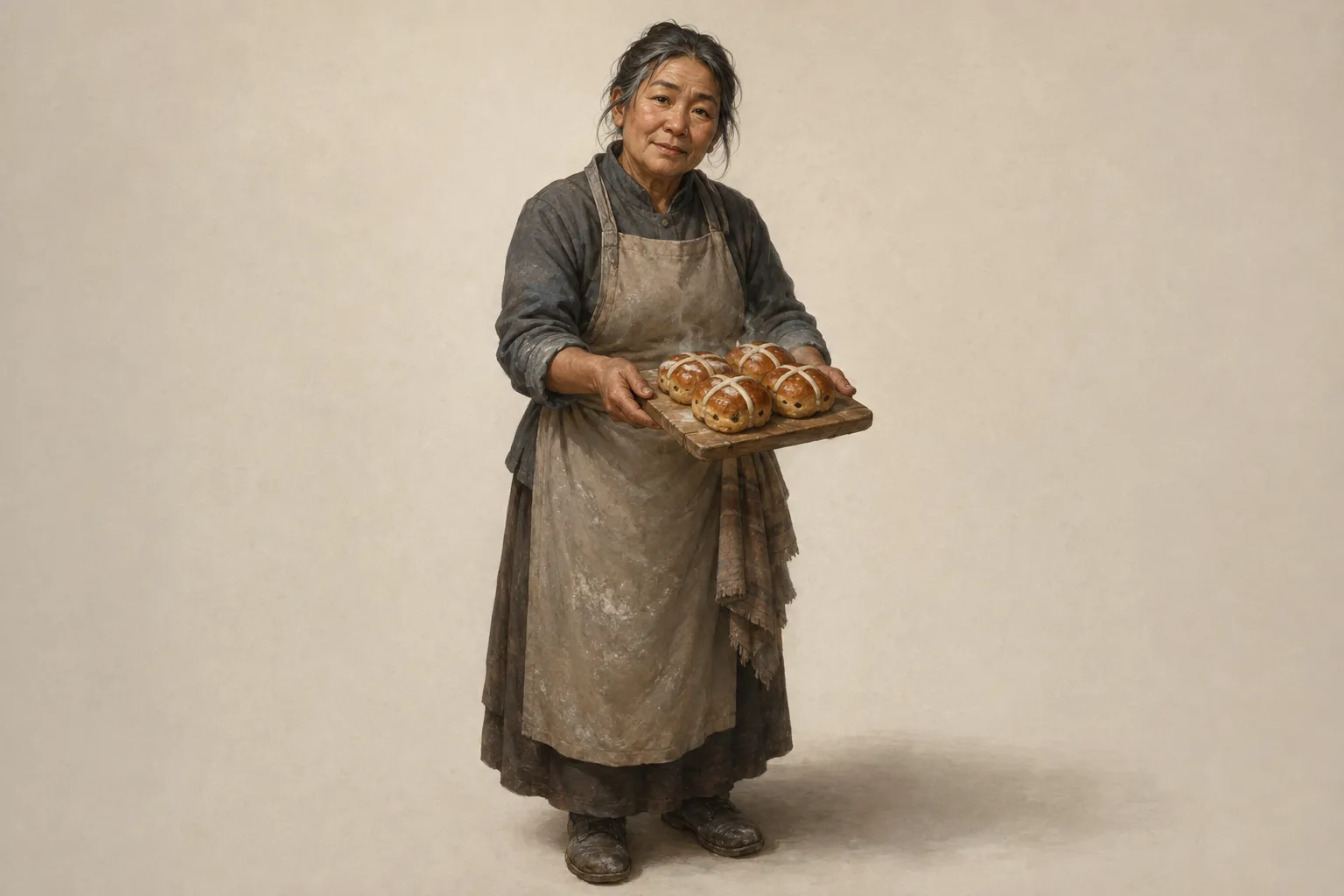
The Hollow’s hearthkeeper, with a place at the table for other people.
Biography
Includes early city and Hollow developments.
Jun keeps the Hollow’s longhouse fed and functioning. She bakes, cooks and teaches, drawing children and adults into work they can learn by doing. She has plenty to say while doing it. The name Mama Jun belongs naturally to her place in the community.
She came to the Hollow after losing her children to disease during the Retreat. The life she has made there has not replaced them. Her care for the people around her continues beside that loss.
Jun notices when someone needs something they cannot ask for. A rare hot cross bun can be an offer with no explanation required from its recipient. Being welcomed by her does not depend on producing a satisfactory account of one’s distress.
The longhouse asks a great deal of its keeper, and Jun asks a great deal of herself. She makes room for others more readily than she makes room for her own fatigue. Because she is usually so present in speech and activity, her quiet can tell those who know her that something has changed.
Mara helped found the Hollow and carries its political responsibilities. Jun tends the hearth around which much of its ordinary life happens. The two forms of authority meet every day, without being the same job.
Behind the characterStory discussion · Volume 1 spoilers
Jun gives care a material form: food prepared, work taught, a place made available without interrogation. Rowan, who tries to earn belonging by fixing things, encounters a kind of welcome he cannot comfortably turn into payment for a service.
Her losses matter beyond explaining her generosity. Treating the Hollow’s children as replacements would make her grief a problem solved by usefulness, repeating the very bargain Rowan struggles with. Jun can love these people and still miss her children.
There is a cost to being the person who notices everyone else. A community may depend on her reasonably and still fail to notice how much she carries. Her capacity for care does not establish that she needs less of it.
Her connection to the Night Jester belongs to this wider attention. She may notice a hurt that prompts an intervention, but she does not design the Jester’s response. Care passes between participants with different knowledge and discretion. That makes Jun important to the novel’s larger inquiry into intelligence: perceiving a need is part of the work, and deciding how to answer it remains a shared, fallible responsibility.